
The Power of Influencer Marketing: Key Benefits
When you execute a successful influencer marketing plan, it can deliver the kind of outcomes most traditional marketing tactics struggle with: trust and credibility that feels real, targeting that’s naturally accurate, content that you can reuse across social media platforms, and even long-tail results that keep paying you back.
Let’s break down the biggest benefits of influencer marketing, why influencer marketing works, and how to capture these results without wasting marketing budgets on pretty metrics.
What influencer marketing really is (and what it is not)
Influencer marketing is a strategy rooted in a partnership between a brand and a creator. Here, the partner introduces your product or service to their engaged audience in a way that fits their style and the audience’s expectations.
It is not just “access to followers.” It is collaborating with influencers to access:
- A genuine connection the creator has built over time
- A niche audience with shared interests
- A proven content format that holds attention
- A storytelling voice that feels human, not corporate
In the modern digital landscape, influencer marketing in the digital space acts as a bridge. If you treat it like a one-off transaction, you’ll get one-off results. If you treat it like a system, it becomes a vital growth channel where brands connect with consumers.
Types of Influencers: Micro, Mid, Macro, and Niche Creators
Different types of influencers produce different outcomes, and understanding this is key to influencer marketing for brands:

The most profitable influencer marketing efforts usually mix these tiers like a portfolio, not a lottery ticket.
Influencer Marketing Strategies: Sponsorships vs affiliates vs UGC
Influencer marketing offers a few common ways to structure deals:
- Sponsorship (flat fee): You pay for placement and reach within the influencer marketing industry.
- Affiliate (pay per result): You pay a percentage or fixed amount per sale or lead.
- UGC-style (pay for the asset): You pay for content you will reuse in digital marketing ads, landing pages, and social media’s various feeds.
In practice, the strongest influencer marketing strategies combine them. For example: a modest flat fee plus affiliate upside, so the creator gets guaranteed value and you get performance alignment.
Benefit of Influencer Marketing #1: Trust Transfers Faster Than Ads
The advantage of influencer marketing is trust. Marketing in the digital age faces skepticism; people know advertising and marketing tactics want their money. But when a creator recommends something, it serves as an endorsement from a friend saying, “This worked for me.”
That “trust transfer” is why influencer marketing works. It can shorten your sales cycle dramatically. Instead of you trying to build trust from scratch, you inherit credibility in the moment that the potential customers are paying attention.
Why Recommendations Beat Interruptions
Ads interrupt. Influencer content and consumer interaction feels like part of the experience. A creator can explain the “why” behind your product or service, show how they use it, and handle objections naturally, all while the target audience is already tuned in. That’s not just reach. That’s quality of attention.
The Trust-Breaking Mistakes to Avoid
You can destroy trust and credibility quickly if you:
- Force a stiff script that doesn’t resonate
- Sponsor creators whose social following clearly won’t care
- Encourage exaggerated claims the creator can’t stand behind
Your best move is to give content creators clear talking points and a strong offer, then let them speak like themselves.
Benefit of Influencer Marketing #2: Targeting That Feels Natural
Using influencer marketing allows you to target by interest and identity, not just age brackets. Influencers create a space where audiences self-identify. If someone watches a channel about home espresso, they are basically self-identifying as a potential buyer. This makes influencer marketing to boost sales incredibly efficient.
Why “Small Audiences” Can Outperform
A smaller social media presence can be more profitable than a massive one if the niche is tight. Influencers who align with specific topics often see higher engagement rates. Think of it like this:
- A billboard hits thousands of random people.
- A niche creator speaks to a room full of people who already care.
If your product solves a specific problem, niche social media influencers can reach untapped markets and outperform big creators by a lot.
A Quick Fit-Check in 10 Minutes
Before you reach out to the right influencer, do this:
- Watch 2 to 3 recent videos (check TikTok or YouTube).
- Scan the top comments (what do people ask, complain about, celebrate?).
- Look for past sponsorships (what kinds of products do they promote?).
- Ask: “Would this engaged audience buy this, even if there was no discount?”
If the answer is “yes,” you’ve got a strong candidate for a partnership.

Benefit of Influencer Marketing #3: You Get Content You Can Reuse Everywhere
A great integration is not just one of many influencer posts. It’s a content engine. Partnering with influencers can produce:
- A short clip for paid ads on social platforms
- A quote for your landing page to provide social proof
- A demo snippet for onboarding
- A testimonial-style section for email campaigns
This is one of the benefits of digital influencer collaborations: you’re buying both distribution and creative.
Turning Creator Content into Performance Creatives
Influencers often unlock high-performing hooks because they know how to hold attention. If you have usage rights, you can cut down the best moments into multiple variants. Over time, this digital influencer marketing tactic lowers creative production costs and improves conversion rates.
Benefit of Influencer Marketing #4: Better ROI When the Offer is Right
Influencer marketing can be insanely profitable, but only when the offer matches the audience. If the product is confusing or overpriced, content creators can’t save it. But if the offer is strong, influencers can help multiply it.
Hybrid Deals That Reduce Risk
If you want to protect ROI while still attracting great creators, hybrids work well:
- Flat fee + affiliate
- Flat fee + performance bonus (CPA threshold bonus)
- Tiered bonus (higher payout if they hit milestones)
This makes the influencer partnership feel fair and keeps incentives aligned.
A Simple ROI Framework
To keep ROI honest, track:
- Revenue or leads attributed (links + codes)
- Contribution margin (not just revenue)
- Total costs (fees, samples, time, discounts)
If you measure the effectiveness of your influencer marketing, you can improve decisions month over month.
Benefit of Influencer Marketing #5: Faster Feedback Loops
Creators are like a market research channel with a megaphone. The comments section on influencer shares tells you:
- What people don’t understand
- What objections show up
- What alternatives people compare you to
- What feature requests are common
This insight from influencer marketing efforts can upgrade your landing pages, your pricing page, and your sales scripts.
Creators as a Real-Time Focus Group
Instead of paying for surveys, you get unfiltered reactions. Because social media influencers are trusted, the questions are often more honest. If you listen, your product and messaging get sharper fast.
Benefit of Influencer Marketing #6: YouTube Gives You Long-Tail Results
On short-form social media platforms like TikTok, a post can die in two days. On YouTube, a sponsored video can keep getting views for months, sometimes years. That means some influencer marketing campaigns compound. A good integration can keep sending website traffic and sales long after the campaign ends.
Why YouTube Sponsorships Compound
YouTube behaves more like a library than a feed. If a video ranks for search, your brand message keeps resurfacing. For many brands, this makes YouTube the most “evergreen-friendly” influencer channel.
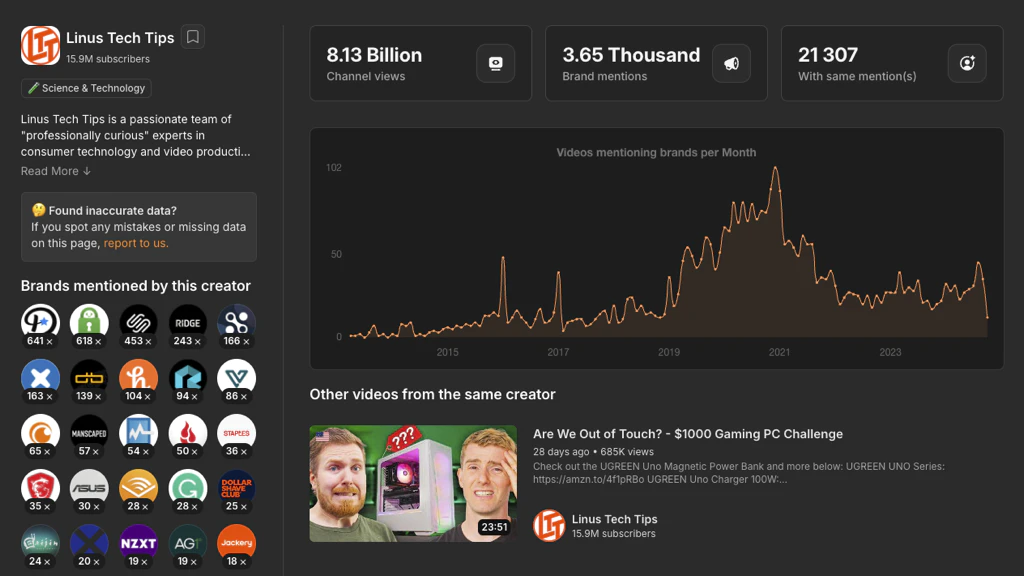
If you are looking for a database to help your influencer marketing campaign, Sponsorship.so might be able to help. Sponsorship.so holds a database for creators and brands to help them reach a branded partnership. You can find which YouTubers are a great fit for the brand, who your competitors are sponsoring, and also calculate the rate of an influencer with our Sponsorship Calculator.
.gif)
Benefit of Influencer Marketing #7: Brand Lift and Memorability
Not every influencer campaign needs instant conversion. Sometimes the best value is memory. When people see your brand awareness repeated by creators they like, your brand becomes familiar. And familiarity drives clicks when the need finally appears.
For example, the number of times you have heard of the phrase "This video is sponsored by NordVPN" would be astronomical. It could be repetitive, but the brand sticks to your head because you've been bombarded with the phrase, and now, when you think of subscribing to a VPN service, you'll probably think of this brand first (This post is *not* sponsored by NordVPN, just in case).
Consistency Beats One-Offs
One sponsorship can work, but consistency is what builds brand momentum. If you show up across multiple relevant influencers in the same niche, you build category association.
Benefit of Influencer Marketing #8: Social Proof and Community Momentum
When many influencers talk about the same product, something powerful happens: social proof stacks. Viewers start thinking, “If everyone I watch uses this, it’s probably legit.” Higher engagement in comments often amplifies the message beyond the creator’s core audience. That’s hard to replicate with traditional marketing tactics alone.
Turning Viewers into Advocates
If you want the momentum to keep going, give people something to join:
- A bonus for using the code
- A referral reward
- A community perk
Influencer marketing sparks attention. Your post-click experience should turn that attention into a loop.
Benefit of Influencer Marketing #9: Competitive Intelligence
Influencer marketing also helps you see the market clearly. When you watch who your competitors sponsor in the influencer marketing industry, you can learn:
- Which niches convert
- Which creators are “hot”
- Which offers are repeated (meaning they work)
Ethical Pattern Spotting
You don’t need to copy anyone. Just notice patterns and build your own influencer marketing strategy. Often, the opportunity is in doing the same thing with a better offer, better fit, and better creative execution.
Benefit of Influencer Marketing #10: Scalability with Systems
The final benefit is that influencer marketing can scale when you treat it like operations, not vibes. A repeatable influencer marketing campaign has:
- Clear goals and key performance indicators
- A creator shortlist process
- A consistent brief format
- Tracking links and unique codes
- A pipeline for outreach and follow-ups
The Minimal Influencer Ops Checklist
- Pick one goal (sales, trials, leads, brand awareness)
- Choose one primary KPI
- Select creators for fit first, size second
- Use a clear brief
- Track with links and codes
- Store results in one place
This is where influencer marketing tools help. If you’re running sponsorships on YouTube at any real volume, having a system for discovery, validation, outreach, and tracking is what keeps you sane. That’s also the idea behind Sponsorship.so: helping brands find YouTube creators and stay organized as they scale.
If you want to learn more about our product, here is a tutorial on How to Use our Sponsorship Database.
Common Mistakes That Kill the Benefits
Most influencer partnerships fail for simple reasons:
- Wrong creator fit
- Weak offer
- No tracking
- One-off mindset
- Confusing brief
- Chasing views instead of outcomes
The “Pretty Metrics” Trap
Views and likes feel good, but they don’t automatically equal business results. If your goal is performance, track clicks and conversions. If your goal is brand, track consistency, repeated exposure, and branded search growth over time.
How to Measure Influencer Marketing Benefits
Measure both leading and lagging indicators.
What to Track Weekly
- Deliverables shipped vs planned
- Clicks and CTR
- Landing page conversion rate
- CPA, ROAS, and payback period (when relevant)
- Higher engagement rates regarding product questions
- How to Compare Creators Fairly
Compare creators within similar formats and audience intent. A 60-second YouTube integration is not the same as a 15-second TikTok short. Bucket creators by format, niche, and typical viewer intent. One data point can lie. A series tells the truth.
A Simple 14-Day Quick-Start Plan
If you want a fast start to using influencer marketing without overthinking, do this:
Days 1 to 3: Setup Pick one product and one goal. Build a landing page that matches the creator’s audience. Create a strong offer.
Days 4 to 7: Outreach Build a list of creators. Send short messages that include why it fits their audience. Working with influencers works best when you treat outreach like sales.
Days 8 to 14: Launch and Learn Launch the first integrations, watch comments, track clicks, and iterate.
- Improve the hook
- Improve the offer
- Refine the brief
- Scale what works
Conclusion
The key benefits of influencer marketing are real: trust, natural targeting, reusable content, better ROI potential, faster feedback, long-tail discovery, brand memory, social proof, competitive insight, and scalable growth.
The key is to stop treating influencer marketing like a gamble and start treating it like a machine. Pick the right influencer for fit, make the offer irresistible, track the basics, and run a consistent pipeline. That’s the power of influencer marketing: turning “creator marketing” into a channel you can actually rely on.
FAQs
1) What is the biggest benefit of influencer marketing? Trust. Working with an influencer carries credibility that ads struggle to recreate, creating a genuine connection with the audience.
2) Is influencer marketing only for big brands? No. Businesses of all sizes win with influencer marketing. Smaller brands often win faster with niche audience creators and performance-based deals because targeting is tighter.
3) How do I choose the right influencers? Start with audience fit. Check content themes on social media platforms, read comments, and look at past sponsorships. Influencer marketing strategy relies on testing a small batch and scaling winners.
4) Should I do flat fee sponsorships or affiliate deals? Both can work. Flat fees buy guaranteed placement. Affiliate deals align incentives. Many marketing strategies use a hybrid to balance risk and upside.
5) How long does it take to see results? Performance can show up immediately if the offer is strong. Brand awareness usually needs repetition. Either way, influencer marketing has evolved to be highly measurable if your tracking is clean.

Alexandru Golovatenco
Hi, I'm Alex. I write articles about YouTube sponsorships for brands, content creators, and agencies. I also created sponsorship.so, which is a tool that helps you find the right fit for a YouTube sponsorship.


![[Tutorial] Using our YouTube sponsorship database website](https://sponsorship.so/rails/active_storage/blobs/redirect/BAh7BkkiC19yYWlscwY6BkVUewdJIglkYXRhBjsAVGkBoUkiCHB1cgY7AFRJIgxibG9iX2lkBjsARg==--03e4d1a545c5e071d010ef913b1dbe4e6058f4fb/open.png)