Playbook: How to Create Successful Influencer Marketing Campaigns
Influencer marketing is not just “pay the creator & hope for sales.” It is closer to building a repeatable machine: you pick a goal, craft an offer, choose the right creators, run clean operations, track results, and then iterate until it prints wins on command.
This playbook is built to help you do exactly that, whether you are a brand, agency, app, e-commerce business, or game studio. You can follow it step by step for your first campaign, or use it as your internal SOP to scale an always-on program.
Step 1: Set Clear Goals and KPIs (Know Your Why)
Every successful influencer campaign starts with a clear objective. Today, brands work with influencers to achieve goals ranging from boosting brand awareness to driving sales – so you must be specific about what you want. Define a primary goal and make it concrete. For example, you might aim to boost brand awareness among Gen Z on TikTok or drive 100 product purchases via an Instagram influencer. Setting a specific goal will guide your decisions and determine what success looks like. Alongside goals, establish your key performance indicators (KPIs) upfront. These are the metrics you’ll track – think engagement rates, reach, clicks, conversions, or ROI. If your goal is awareness, metrics like impressions, reach and follower count growth are key; for sales, focus on link clicks, sign-ups, or promo code redemptions. By choosing relevant KPIs early, you set a benchmark to measure against and get data to optimize later.
Identify your target audience at this stage as well. Know who you want to reach through the influencer’s following. Outline the demographics and interests of your ideal customer. This will inform which creators are a fit for your brand. The more an influencer’s audience matches your target audience, the more likely their content will resonate and drive action. For instance, an influencer marketing campaign aimed at young gamers should partner with gaming creators, not lifestyle bloggers. Having a clear audience in mind makes influencer selection much easier. This upfront planning ensures your whole approach stays strategic and goal-driven, rather than just chasing vanity metrics.
Step 2: Craft an Irresistible Offer for Influencers
With goals set, figure out what you’ll offer creators to entice them to participate. Successful influencer marketing is a two-way street – the creator needs to get value from the partnership just as you get promotion. Start by deciding on your collaboration model and budget. Some brands begin by sending free products or early access to services, especially when working with nano-influencers or micro-influencers. Gifting product can be a low-cost way to get a creator to post if they genuinely like your brand. For bigger influencers or more formal deals, you might provide monetary compensation, either as a flat fee per post or as a commission through an affiliate marketing program (for example, a percentage of sales generated via the influencer’s unique link or discount code). There’s no one-size-fits-all – the key is to craft an offer that matches the influencer’s size and effort. A nano creator might be happy with free samples and a shout-out, whereas a YouTube influencer with 500k subscribers will expect payment upfront. For more information on negotiating the right sponsor deal for YouTube, this article might interest you.
When budgeting, consider the expected return on investment. How much are you willing to spend for your desired outcome? Many brands calculate a target cost per acquisition or per impression and work backwards. You can use a sponsorship calculator (for example, Sponsorship.so’s sponsorship calculator) to estimate fair pricing for different platforms and audience sizes. This helps you offer a competitive rate that also makes financial sense.

Be clear about what you’re asking for in return – outline the deliverables (e.g. one Instagram post and two Stories, or a dedicated YouTube video, or a series of TikTok videos). The offer should feel win-win. Influencers are more likely to commit if you show you value their work. Clearly communicate the benefits of influencer collaboration: not only payment but also how it’s an opportunity for them to provide value to their followers or gain exposure. Getting this creator “buy-in” from the start leads to a smoother partnership.
Step 3: Find and Choose the Right Influencers
Choosing the right influencer can make or break your campaign, so devote time to discovery and vetting. First, profile your ideal influencer partner. What type of influencers does your target audience follow? Consider the niche (beauty, tech, fitness, gaming, etc.), content style (tutorials, vlogs, comedy sketches), and the platforms they use most (Instagram, TikTok, YouTube, etc.). The creator should match your brand’s values and image – their persona and audience should align with your brand’s identity. Authentic alignment is crucial; a mismatched partnership will feel forced and audiences will notice.
Next, decide which tier of influencer to target in terms of reach. In the influencer space, bigger isn’t always better. There are nano-influencers (1–10k followers), micro-influencers (10k–100k), macro-influencers (100k–1M), and mega/celebrity influencers (1M+). Micro and nano influencers often deliver better results than huge stars when it comes to engagement and conversions. An influencer with millions of followers might look good on paper, but if those viewers aren’t your target audience or the creator doesn’t genuinely connect with your brand, it won’t move the needle. It’s a case of quality over quantity – a smaller, highly relevant audience can outperform sheer volume. So don’t fixate solely on follower count. Focus on audience relevance and true engagement.
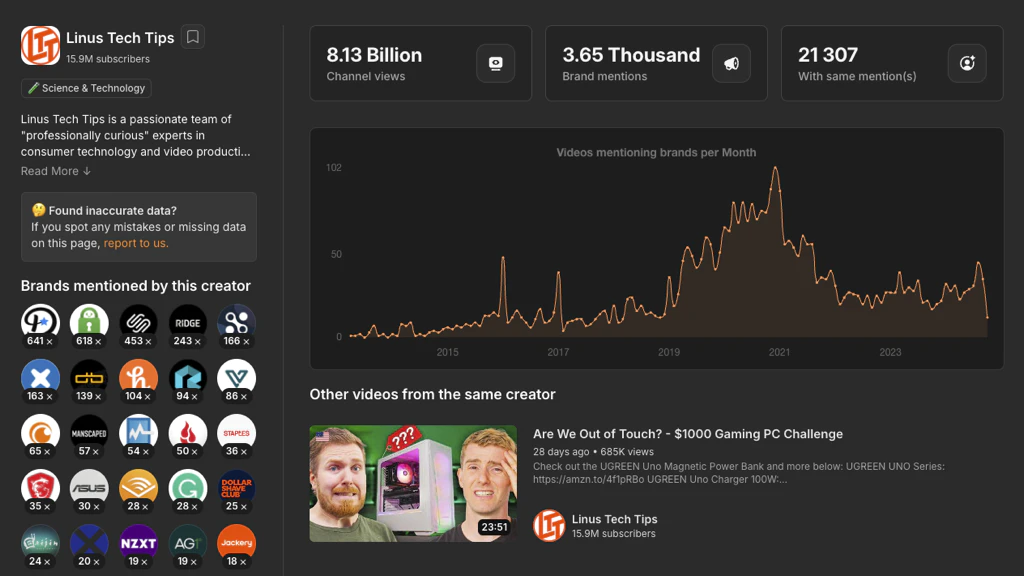
When evaluating candidates, dig into their metrics and content. Check their average likes, comments, and views relative to follower count (their engagement rate). Do they spark conversation and interact with their audience? An influencer who actively replies to followers has built trust you can leverage. Also review their content – does it align with your brand’s style and values? If you’re promoting a finance app, a prank comedian may not be the best influencer choice, whereas a fintech YouTuber would be ideal. Content that feels native to the creator’s style will perform better than something out of left field. For example, if you sell makeup, a beauty guru doing a tutorial or unboxings of your product will land well, whereas a random cameo in a prank video might flop. Look at past partnerships too: have they posted quality sponsored content before? Any red flags like fake followers or low authenticity? Use tools if you can – you can find influencers by searching social media, and many platforms have creator discovery features (like Sponsorship.so’s database) to help find creators in your niche and filter by follower count, engagement, etc. Take your time with selection. Choosing strong partners upfront will set you up for success. If you need more in-depth information about how to find the right YouTubers to sponsor, check out this article.
.gif)
If you want to learn about how to use our YouTube database to its full potential, here is a guide on the Sponsorship.so's interface and features.
Step 4: Reach Out and Form Influencer Partnerships
With a shortlist of creators ready, it’s time to make contact and build the relationship. Reach out with a personal touch. Start with a friendly introduction that shows you appreciate their content and explain why you think they’d be a great fit. For example: “Hi [Name], we love your honest tech reviews – we have a new gadget that we think your audience would enjoy, and we’d love to partner with you on a review.” Avoid generic, copy-paste outreach; influencers can spot a mass email. You might use a basic outreach script to ensure you cover key points, but always customize it for each person.
In your message, be clear about what you’re offering (free product, payment, etc.) and what you’re looking for, but don’t overwhelm them with details upfront. Emphasize that you’re excited to work with influencers and that you value their creative input. Highlight the creative freedom they’ll have to create content in their own style. This makes the opportunity more appealing and encourages buy-in from creators. When influencers feel trusted to do what they do best, they’ll be more enthusiastic and the content will be more authentic.
Once a creator shows interest, hash out the specifics together. Agree on timelines, content deliverables (what kind of posts/videos and how many), key messaging points, and anything not to do. Put everything in writing (even just an email recap) so both sides are clear. Also, remember disclosure rules – influencers must tag sponsored content (#ad or #sponsored on platforms like TikTok or Instagram). A transparent partnership builds credibility and building trust with the audience.
Keep communication professional and prompt. Answer their questions, listen to their ideas (they know their audience well), and be flexible when possible. Negotiate in good faith – if they counter on budget or scope, see if you can meet in the middle. The goal is a positive partnership where both parties are happy. When you form relationships with influencers who genuinely connect with your brand, the collaboration feels natural and audiences will respond better. Treat creators as creative partners, not just ad outlets, and you’ll set the stage for a successful campaign.
Step 5: Collaborate on Content That Feels Authentic
Now let the influencer shine. Provide them with what they need, but give them leeway to make content that feels genuine. Share a campaign brief that clearly tells your story and outlines important product info and goals. But don’t dictate a word-for-word script – remember, authenticity is key. Content that feels like a personal recommendation or a seamless part of the creator’s normal programming will always beat a stiff, scripted ad. For instance, a skincare influencer could tell the whole story of how your cream became part of their nightly routine, rather than just saying “This cream is great, buy it.” Allow them to talk about your brand in their own voice. If you micromanage the messaging or demand a rigid script, you’ll strip away what makes their content engaging in the first place.
It often works well to co-create the content concept. You might suggest a general idea (maybe an unboxing video, a tutorial, or a day-in-the-life featuring your product) and then let the influencer refine it to suit their style. This way, the final piece feels organic to their channel. Remember, influencers understand what type of content their audience enjoys, so trust their expertise. For example, influencers on YouTube often do longer-form reviews or how-to videos (product demos, unboxings, etc.), while a TikTok influencer might integrate your product into a quick, catchy skit or trend. Different platforms like Instagram, YouTube, and TikTok have varying norms, so make sure the plan fits the platform. For YouTube videos, go check out our Complete Guide on YouTube Influencer Marketing to get more detailed information.

Stay in touch during the content creation process. If you need to review the content before it goes live (for brand accuracy or legal reasons), let the creator know early and keep feedback minimal. If you chose the right influencer and gave a good brief, you shouldn’t need major edits. When the content goes live, help amplify it. Share it on your brand’s channels, leave a positive comment, and engage with the audience. Showing that you’re excited about the collaboration will encourage more viewers to check out your brand. Most importantly, don’t overly control the narrative – content that feels real and unscripted is what will resonate. Audiences are likely to trust an influencer’s genuine opinion more than a polished ad. By giving the creator creative freedom and support, you set the campaign up for success. Authentic enthusiasm from the influencer leads to better results.
Step 6: Track Results and Optimize the Campaign
Once content is rolling out, monitor performance closely and be ready to adjust. Revisit the KPIs you set and watch how each influencer’s posts are doing. Use analytics (platform insights or an influencer campaign dashboard) to track key metrics across all posts. Look at reach, views, likes, comments, shares – whatever matters for your goals. Also keep an eye on conversions: if you provided affiliate links or discount codes, track how many sales or sign-ups each influencer generated. This will quickly show you what’s working and what’s not. Maybe your TikTok videos are driving tons of traffic while the Instagram posts are only lukewarm, or vice versa. Collect these insights to make data-driven tweaks.
Calculating ROI is important too. Did the campaign deliver a good return on what you spent? For example, if you spent $5,000 on products and fees and got 500 new customers, that’s $10 per customer – is that within your target? Influencer marketing, when done well, can yield a strong return (brands earn about $5.78 for every $1 spent on influencers on average). Your results will vary, but the key is to measure it. If your goal was sales, calculate revenue or new customers versus costs. If it was brand awareness, examine growth in followers, mentions, web traffic, or search volume around your brand. Modern tools can help by acting as a campaign CRM, automatically pulling in engagement data and conversion tracking from your influencers’ links so you see the full impact.
As data comes in, analyze it closely and learn. Identify what’s actually working and what isn’t. Which influencers or platforms delivered the best results? Which content formats resonated most? Use these findings to refine your approach to influencer marketing for next time. For example, perhaps a squad of micro influencers on TikTok outperformed that one celebrity on YouTube – adjust your strategy accordingly (it’s not uncommon; smaller influencers often deliver better results than mega influencers due to their loyal communities). This process will also dispel any influencer marketing lies like “bigger is always better” once you see the data.
Consider the bigger picture as well. If certain influencers knocked it out of the park, think about making them long-term influencer partners or brand ambassadors. Ongoing influencer collaborations can yield compounding benefits as their audience sees them promote your product repeatedly, further building trust over time. On the flip side, if something didn’t work, note it and adapt – even flops teach you something. Keep a record of results so you can spot patterns (maybe video content on one platform tends to outperform others, or certain messaging leads to more engagement).
Finally, scale up what works. Instead of one-off campaigns, integrate influencers into your always-on marketing strategy. You can maintain a steady program where creators post about your brand every month, informed by the insights you’ve gained. With a solid internal marketing playbook like this, you can keep influencer marketing running as a repeatable process. Use tools and systems (like a central CRM or dashboard) to manage multiple influencers as you grow. By treating influencer campaigns just like marketing any other channel – with planning, tracking and optimizing – you’ll continuously improve and expand your reach.
Conclusion: Quality Over Quantity for Long-Term Success
At the end of the day, the goal is to make influencer marketing into a reliable growth engine. When you pick the right creators and let them tell your story in a way that genuinely connect with your brand, people trust the message. That trust boosts brand awareness and drives conversions. Remember quality over quantity – a few well-chosen partnerships can beat a lot of influencer posts that only might look impressive on the surface. Use this playbook to stay strategic from planning through optimization. Now put these steps into action and watch your influencer program become a well-oiled machine that gets people talking about your brand.

Alexandru Golovatenco
Hi, I'm Alex. I write articles about YouTube sponsorships for brands, content creators, and agencies. I also created sponsorship.so, which is a tool that helps you find the right fit for a YouTube sponsorship.