Podcast Advertising: 14 Podcast Ad Examples
Podcast advertising has quietly become one of the most effective channels for brands that want trust, attention, and measurable results. Unlike scroll-based ads that people ignore, a podcast ad is delivered by a human voice, inside a show the listener actively chose. That’s a powerful combo.
This guide to podcast advertising breaks down the modern podcast advertising playbook: the main audio experiences formats, how to pick the right podcasts, how to write podcast ad copy that converts, and 14 podcast advertising examples from top shows that also have a YouTube channel(so naturally a video podcast as well). It also ties the strategy back to YouTube, because many podcasts are now watched as much as they’re listened to.
14 podcast advertising examples from top YouTube podcasts
Below are podcast ad examples and podcast advertising examples from shows that also have a YouTube channel. These examples are useful because they show repeated sponsor categories and the style that keeps podcast ads include content people actually listen to.
The Joe Rogan Experience
The Joe Rogan Experience features comedian and UFC commentator Joe Rogan hosting long-form, often unfiltered conversations with diverse guests ranging from fighters to scientists. In this episode, he sits down with Jensen Huang, the CEO of Nvidia, to discuss the future of AI and computing. The episode features mid-roll spots for Visible by Verizon and the sports betting platform DraftKings. This pairing works effectively because Rogan’s massive, predominantly male audience aligns perfectly with sports betting demographics, while the tech-heavy subject matter of this specific episode makes a major wireless carrier like Visible a relevant, practical service to pitch. The ads appear as two distinct mid-roll interruptions during the conversation.
The Tim Ferriss Show
The Tim Ferriss Show is famous for deconstructing world-class performers, with Ferriss focusing on optimization, business, and lifestyle design. In this interview with hacker and inventor Pablos Holman, the discussion covers future technology and problem-solving. The episode features mid-roll sponsorships from Cresset, Maui Nui Venison, and his long-time partner AG1. This selection demonstrates excellent audience targeting; Cresset appeals to the high-net-worth entrepreneurs who listen for business advice, while AG1 and Maui Nui tap into the "bio-hacker" demographic that Ferriss cultivated. These ads are delivered as mid-roll breaks, allowing Ferriss to endorse the products in his own voice to a trusting audience.
Huberman Lab
Hosted by neuroscientist Andrew Huberman, the Huberman Lab discusses science and science-based tools for everyday life. In this episode featuring communication expert Matt Abrahams, they explore how to speak more effectively under pressure. The extensive sponsor list includes AG1, Eight Sleep, BetterHelp, Joovv, Mateina, and Function Health. This is a textbook example of niche alignment; Huberman’s listeners are deeply invested in health optimization and protocols, making supplements, sleep tech, and health tracking services an immediate sell. These advertisements are structured as three separate mid-roll breaks, with two sponsors featured back-to-back during each interruption.
Lex Fridman Podcast
Lex Fridman is an AI researcher who hosts deep, philosophical conversations about technology, history, and the human condition. During this high-profile interview with Pavel Durov, the founder of Telegram, they discuss freedom of speech and censorship. The episode is supported by mid-roll ads for Miro, UPLIFT Desk, Fin, LMNT, and Shopify. These sponsors fit the "knowledge worker" demographic perfectly; listeners interested in tech and startups are likely to need ergonomic office gear, electrolytes for focus, or platforms to build their own businesses. The ads are placed as mid-rolls, maintaining the serious tone of the interview while targeting the intellectual curiosity of the audience.
Conan O'Brien Needs A Friend
Conan O’Brien Needs A Friend features the legendary comedian chatting with celebrity guests in a loose, improvisational format. In this hilarious episode with actor Will Arnett, they banter about their long friendship and careers. The podcast attracts major corporate sponsors like the Hyundai Palisade Hybrid, U.S. Bank, Amazon, and Ashley. Because Conan has such broad, mainstream appeal and high entertainment value, these mass-market brands utilize his show for maximum reach and brand awareness rather than niche targeting. The advertisements are inserted as two separate mid-roll breaks, with two different commercials playing during each slot.
Call Her Daddy
Call Her Daddy, hosted by Alex Cooper, is a massive female-oriented podcast discussing relationships, sex, and empowerment. This blockbuster episode features an interview with Kim Kardashian, arguably the ultimate guest for this demographic. The sponsor list is perfectly curated for her young female audience: Tinder for dating, BetterHelp for mental health, Shopify for female entrepreneurs, and a partnership with YSL Beauty’s "Abuse Is Not Love" program. The brands align seamlessly with the show’s themes of dating life and self-care. These ads are distributed across three mid-roll breaks; the first contains two ads, while the subsequent breaks feature standalone spots.
Impaulsive
Impaulsive is a high-energy podcast hosted by internet personality and wrestler Logan Paul, known for discussing pop culture, boxing, and internet fame. In this episode featuring a chaotic interview with actor Charlie Sheen, the show integrates sponsorships from SeatGeek, Topps, and Fanatics, alongside self-promotion for Paul’s own merchandise. This advertising strategy is highly effective because Paul’s demographic skews young and experiential; his listeners are the exact crowd buying concert tickets, trading cards, and influencer apparel. The placements are executed as three short, punchy mid-roll interruptions, often with Paul himself hyping the products with the same enthusiasm he brings to the interview.
The Ben Shapiro Show
The Ben Shapiro Show is a daily conservative political commentary podcast where the host breaks down current events and culture wars. In this episode analyzing a Trump address and polling numbers regarding AOC, the sponsor list is extensive, including Perplexity AI, Birch Gold, PureTalk, Priority Tax Relief, and the Alliance Defending Freedom. These sponsors are carefully curated for a conservative audience concerned with censorship, economic instability, and traditional values, offering solutions like gold hedging and alternative mobile carriers. The ads are delivered in a dense block of three mid-roll breaks, with two sponsors featured back-to-back in each slot to maximize revenue.
Acquired
Acquired is a premium business podcast where hosts Ben Gilbert and David Rosenthal dissect the history and strategy behind great companies. This episode features a rare, in-depth interview with former Microsoft CEO Steve Ballmer. To match this high-level content, the show features elite B2B sponsors including J.P. Morgan Payments, Statsig, Vercel, and Anthropic. This alignment is strategic; the audience consists of software engineers, product managers, and founders who actually make purchasing decisions for enterprise technology. The advertisements are presented as four polished mid-roll readings, seamlessly blending into the sophisticated and educational tone of the show.
Your Mom’s House
Your Mom’s House, hosted by married comedians Tom Segura and Christina P, is a comedy podcast known for its crude humor and internet oddities. In this episode, which debates whether drinking matcha is masculine, the hosts deliver ad reads for Skims Mens, Aura Frames, and Squarespace. Despite the show’s often raunchy vibe, these lifestyle and tech brands work well because the audience is largely comprised of young adults and couples who trust the hosts' genuine, albeit comedic, recommendations for gifts and apparel. The ads are grouped into two mid-roll breaks, heavily weighted toward the beginning of the episode to catch listeners early.
Last Podcast on the Left
Last Podcast on the Left combines dark comedy with rigorous research into serial killers, cults, and the paranormal. This episode dives into the classic legend of the Amityville Horror. The diverse sponsor list ranges from the horror movie Primate and Sling TV to BetterHelp and Tempur-Pedic. This mix addresses the duality of their fan base: horror enthusiasts who want entertainment, and a broad demographic of young adults who value mental health services and affordable tech like Mint Mobile. The advertising is heavy, featuring a pre-roll followed by two mid-roll blocks containing two to three ads each.
Rotten Mango
Hosted by Stephanie Soo, Rotten Mango is a true crime podcast that blends deep research with a storytelling style that feels like gossiping with a friend. In this episode, she dives into the dark details of Ghislaine Maxwell’s connection to Jeffrey Epstein. The episode is sponsored by Shopify, the e-commerce platform. The advertisement is placed as a standard mid-roll, allowing the host to pivot briefly from the intense narrative to a lighter promotion.
Modern Wisdom
Modern Wisdom features host Chris Williamson exploring psychology, fitness, and human nature with various experts. In this episode, he speaks with popular neuroscientist Dr. Andrew Huberman about productivity habits. The episode is sponsored by Function Health, a platform for comprehensive lab testing. This is an undeniable fit; listeners who tune in for Huberman’s protocols are already deeply invested in bio-hacking, health optimization, and data-driven wellness. Uniquely, this podcast often groups its sponsors to avoid interrupting the deep conversation, and in this instance, the advertisement appears as a significant block at the very end of the episode.
The Bill Simmons Podcast
The Bill Simmons Podcast is a staple in the sports world, featuring analysis of the NBA, NFL, and pop culture. This episode breaks down NBA power rankings and trade rumors with guest Rob Mahoney. The show is supported by Uber Eats and State Farm. The alignment here is traditional but effective sports marketing: Uber Eats pitches "Gameday Deals" specifically to fans ordering food while watching the game, while State Farm targets the predominantly male sports demographic with reliable financial service branding. The advertisements are placed as two mid-roll breaks that occur relatively early in the episode to capture the audience before they settle into the long discussion.
What makes a podcast ad different from other ads?
A podcast ad, or an audio ad is closer to a recommendation than a commercial. The listener is not just being “targeted,” they’re in the middle of a relationship with a host they’ve spent hours with. That relationship is the unfair advantage.
A great podcast ad also lands differently because of context. People listen while commuting, cooking, training, or walking. They’re relaxed. They’re not in defensive “ad avoidance mode” the way they are on social feeds. When the podcast host shares a personal endorsement and makes it feel like a natural part of the show, the audience listens without sometimes realizing it's an audio ad.
For brands, podcast advertising sits somewhere between influencer marketing and direct response. You can run a podcast ad campaign for brand awareness, or you can run it like performance marketing with tracked links, promo codes, and conversion goals.
What are the main types of podcast ad placements: pre-roll, mid-roll, and post-roll?
Most podcast ads include three placement options. The placement you choose changes how much attention you get and what kind of message you can deliver.
Pre-roll happens at the start of a podcast episode. It’s great for quick brand recall because most listeners are still tuned in. It’s usually short, so it works best for simple offers and clean positioning. Think: “Here’s what we do, here’s why it matters, here’s where to go.”
Mid-roll happens in the middle of an episode and is usually the highest performing placement. By the time you reach a mid-roll, the listener is invested. They’re less likely to drop off. Mid-roll ads are often longer and are where you can deliver the strongest host-read story, the clearest value proposition, and the best conversion pitch. This can be classic 60-second branded segments that you can often find in different types of branded content.
Post-roll happens at the end of an episode. Some listeners drop before the outro, but the ones who remain are the most loyal. Post-roll can work as a reminder CTA, especially if your brand is already mentioned earlier, or if you’re buying it as a cheaper add-on.
A practical approach is to start with mid-roll, then expand to pre-roll if you want more reach and frequency, and treat post-roll as bonus inventory.
What are the main types of podcast ad: host-read, pre-recorded, and dynamically inserted?
When you are getting familiar with the different types of podcast ads, you’ll often hear “types of podcast ad” described in two ways: how the ad is delivered, and how it’s inserted into the episode. Both matter.
Host-read ads are delivered by the podcast host in their voice and tone. Host-read is usually the best-performing ad type because it feels like a personal recommendation. It can include humor, a story, or a real experience with the product. This is also where personal endorsement shines. It can be a very natural transition while streaming audio since the host's voice keeps the flow going.
Pre-recorded ads are produced spots, like radio ads. They can be effective ads for large brands that want strict control over script and sound design, but they often feel less native. They may still work when the offer is simple and the message is strong, or when your goal is broad awareness across many podcasts.
Dynamically inserted means the ad is inserted into an episode automatically, often at playback time. This matters because dynamically inserted ads can be targeted, scheduled, swapped, and tested. You can change creatives without touching the original episode, target by region, and rotate messaging based on campaign objectives. Contrary to the baked-in, traditional way, this keeps the older episodes more up to date.
In real campaigns, the sweet spot is often a host-read ad that is dynamically inserted, so you get authenticity plus flexibility.
How do you choose the right podcast and ad type for your brand?
The simplest way to choose a podcast is not “biggest audience.” It’s “most aligned audience.” You’re buying trust, not just impressions. The best branded podcasts have values that align with the brand's story and share them to the right listeners.
Start with your target audience. Ask: what is their favorite podcast, what do they care about, and what kind of editorial content do they spend time with? A finance product should not feel forced into a comedy podcast unless the host can make it fit. A health product fits naturally into a science or wellness podcast. A dev tool fits better in tech podcasts than in general entertainment.
Then decide your ad type and formats and placements based on your offer:
- If you want conversion, choose a host-read mid-roll with a clear CTA.
- If you want to increase awareness, pre-roll plus mid-roll repetition works well.
- If you want broad reach across many podcasts, dynamically inserted ads are useful.
Finally, listen to a few episodes of the specific podcast and find examples of branded episodes. Does the host sound credible when they promote something? Do they make sponsor segments feel like a natural part of the show? Do they manage to keep the listener engagement high enough? If the podcast host rushes through every sponsor read, your performance will suffer.
How do you craft podcast ad copy that actually drives conversion?
Great podcast ad copy is not a corporate script. It’s an audio storytelling with a purpose.
Here’s a simple script structure that works:
- What it is (in plain language)
- Why it matters (pain or desire)
- A personal moment (host read authenticity)
- The offer (clear and specific)
- The CTA (simple to remember)
Keep the script human. If the host-read ad is too stiff, it will sound like a pre-produced ad. Give the host talking points and let them adapt, but include must-say details: pricing claim rules, disclaimers, and the offer.
Make the CTA easy. Use one short link and one promo code. Repeat it. Don’t include five steps. If you want conversion, remove friction.
Also, don’t try to squeeze everything in. Podcast listeners will remember one clear benefit, especially when it’s anchored to a personal endorsement.
What makes podcast advertising work for brand awareness, not just sales?
Podcast advertising is underrated for brand awareness because it creates familiarity at scale, without feeling like an interruption.
A listener might not buy immediately, but the brand recall compounds. The power of audio is that you get to engage audiences a step further than a normal ad. They hear you on one episode, then another, then again a month later. By the time they actually need your product, you’re already trusted.
Brand awareness podcast ads work best when the message is consistent. The hook should stay the same across episodes. You can tweak the offer, but keep the identity steady. Think of it like audio billboards, except the billboard is read by someone the listener trusts.
If you’re a brand that sells to creators, founders, developers, or health-conscious consumers, podcasts can connect with audiences in a way that display ads rarely do.
How do you run a podcast advertising campaign end-to-end?
Here’s the practical workflow:
- Define campaign objectives in-house: awareness, trials, sales, or retention.
- Choose your podcasts based on target audience fit and credibility.
- Pick ad formats and placements, usually mid-roll host-read to start.
- Write talking points and a clear offer, then let the host deliver naturally.
- Track results via unique link and promo code.
- Iterate: improve the offer, adjust messaging, shift budget to the best-performing podcast.
Run it like performance marketing, but give the creative control to the creator. The best campaigns don’t over-optimize the voice out of the ad.
How do you find YouTube podcast sponsorship opportunities and manage outreach?
Many podcasts are effectively YouTube channels now. This is very important because it's possible to add clickable links, comments, and visual reinforcement on YouTube. The sponsorship can live in the digital audio, the video, and the description. For further information, check out our Sponsor guide 101: How do YouTube Sponsorships work?
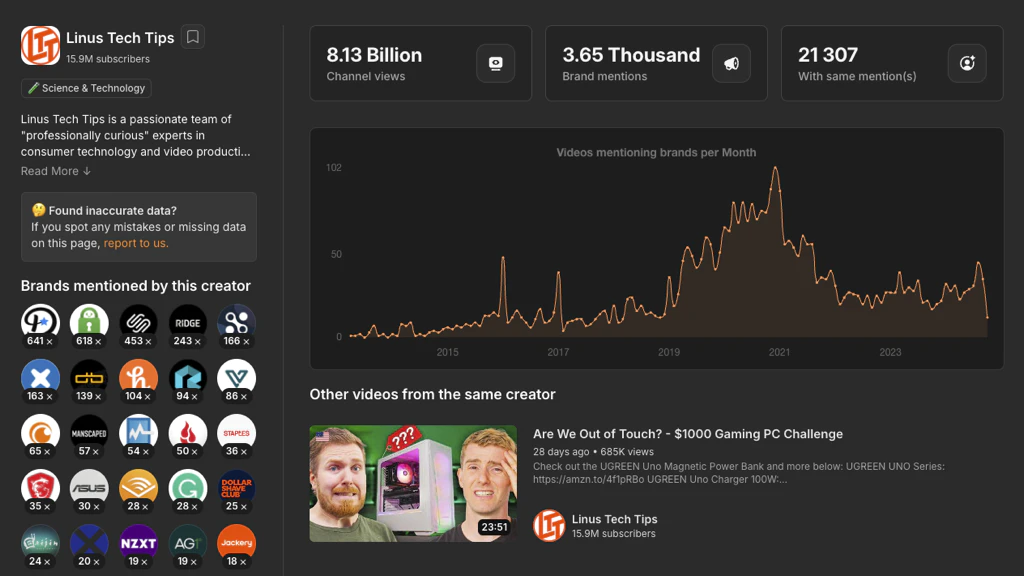
This is also where Sponsorship.so can help, with an important nuance: Sponsorship.so is a YouTube sponsorship platform, not a podcast analysis platform. It doesn’t analyze podcasts specifically, but it helps brands discover and manage YouTube creator sponsorship opportunities. Since many podcasts have YouTube channels, you can still use Sponsorship.so as a way to identify YouTube creators in relevant categories, see patterns in their sponsorships, and manage outreach workflows. You can find out more in our article on How to Find YouTubers to Sponsor.

The biggest win for brands is turning discovery into a repeatable machine: find creators, outreach with a clear offer, track replies, manage a pipeline, and build a list of reliable partners for your next campaign.
Conclusion
Podcast ads are one of the rare channels where people actually listen. If you match the right podcast to your brand, choose the right ad type, and let the host deliver a real personal endorsement, you get what most marketing wants but rarely achieves: trust plus measurable conversion.
And as more podcasts become YouTube-first or YouTube-parallel, the opportunity expands. You get audio attention and video visibility. Treat it like a partnership, run it like a system, and your next campaign can become a repeatable growth lever.
FAQs
1) What is the best podcast ad placement for conversions?
Mid-roll usually wins because the listener is already engaged, and the host can deliver a longer, more persuasive message.
2) Are host-read ads better than pre-recorded ads?
Most of the time, yes. Host-read ads feel native and believable, especially when the host shares a real experience.
3) How do you track podcast advertising performance?
Use unique links and promo codes per podcast. Keep the CTA simple so listeners actually use it.
4) What types of brands do best with podcast advertising?
Subscription services, consumer products, wellness brands, apps, and any brand that benefits from trust and repeated exposure.
5) Can podcast ads work on YouTube podcasts?
Absolutely. Many podcasts have YouTube channels, and sponsorships often include the ad read plus description links and video visibility.

Alexandru Golovatenco
Hi, I'm Alex. I write articles about YouTube sponsorships for brands, content creators, and agencies. I also created sponsorship.so, which is a tool that helps you find the right fit for a YouTube sponsorship.